Poverty and inequality in India: Key trends and achievements
Key facts, background context, and practical takeaways as Poverty and inequality in India: Key trends and achievements, tracked by Need Bharat's Economy, Banking & Jobs desk.
By Need Bharat News Desk (Reporter)

Key Takeaways
- Primary Update (27 November 2026): Poverty and inequality in India: Key trends and achievements, tracked with source attribution to EY.
- Institutional Scope: Developments align with procedures and updates overseen by Central & State Administrative Authorities in India (pib.gov.in, state government portals, and primary agency records).
- Cross-verify key dates, eligibility rules, and administrative orders via official government press releases.
NEW DELHI — Moving to the forefront of today's economy, banking & jobs coverage on 27 November 2026, Poverty and inequality in India: Key trends and achievements. Based on verified details surfaced via EY and institutional norms governing Central & State Administrative Authorities in India, here is a comprehensive breakdown of the facts, context, and key checkpoints.
Verified Timeline & Core Factual Breakdown
According to factual details reported via EY, poverty and inequality in India: K trends and achievements | - India. Observers advise cross-referencing any follow-up notices or corrigenda directly through pib.gov.in, state government portals, and primary agency records.
Citizens, institutional administrators, and sector observers across India monitor service-delivery timelines, infrastructure readiness, and official clarifications as implementation progresses. Observers advise cross-referencing any follow-up notices or corrigenda directly through pib.gov.in, state government portals, and primary agency records.
Broader Context & Sectoral Significance
Public-interest developments across India move from initial announcements to field execution through departmental circulars, budgetary allocations, district-level coordination, and statutory oversight.
Citizens, institutional administrators, and sector observers across India monitor service-delivery timelines, infrastructure readiness, and official clarifications as implementation progresses.
What Changes in Practice & Upcoming Deadlines
Across India, stakeholders affected by "Poverty and inequality in India: Key trends and achievements" — first highlighted via EY on 27 November 2026 — face concrete scheduling and compliance decisions. Because Central & State Administrative Authorities in India enforces strict cutoffs and documented procedures through pib.gov.in, state government portals, and primary agency records, separating confirmed official instructions from informal commentary is critical at every stage of the process.
What Stakeholders & Readers Should Track Next
Cross-verify key dates, eligibility rules, and administrative orders via official government press releases.
Track district or nodal-agency implementation notices affecting local commuters, students, or residents.
Follow verified follow-up briefings as agencies release operational data and progress audits.
As subsequent notices or clarifications emerge via pib.gov.in, state government portals, and primary agency records, clarity on execution benchmarks will sharpen further. Readers following Economy, Banking & Jobs can track linked dispatches below for continuous coverage.
Sources & Editorial Methodology
Independently reported and synthesized by Need Bharat's Economy, Banking & Jobs desk on 27 November 2026, attributing initial dispatch details to EY and cross-referencing public institutional frameworks (pib.gov.in, state government portals, and primary agency records).
- EY: Poverty and inequality in India: Key trends and achievements (PRIMARY DOCUMENT)
EY dispatch (27 Nov 2026)
View Source Document
Editorial Desk
Official newsroom desk byline for verified dispatches, public briefings, and collaborative reporting from Need Bharat.
Related Coverage

Public Sector Banks Strengthen Financial Performance with Record Asset Quality, ₹127 Lakh Crore Gross Advances, ₹165.2 Lakh Crore Deposits a
Key facts, background context, and practical takeaways as Public Sector Banks Strengthen Financial Performance with Record Asset Quality, ₹127 Lakh Crore Gross Advances, ₹165.2 Lakh Crore Deposits and Historically Low Net NPA Ratio of 0.33%, tracked by Need Bharat's Economy, Bank

AI can generate $600-700 billion in economic value for SME sector Briefing: RBI Governor Sanjay Malhotra
Complete Need Bharat briefing on AI can generate $600-700 billion in economic value for SME sector: RBI Governor Sanjay Malhotra (27 November 2026), covering core facts, Reserve Bank of India (RBI), Ministry of Finance & Market Regulators context, and what comes next.

Two IIT Patna grads leave tech jobs to build robots, raise Rs 22.36 crore for startup
Complete Need Bharat briefing on Two IIT Patna grads leave tech jobs to build robots, raise Rs 22.36 crore for startup (25 November 2026), covering core facts, National Testing Agency (NTA) & JoSAA Counselling context, and what comes next.
State Bank of India hires 1,540 Junior Associates to fill backlog vacancies and improve customer service
State Bank of India hires 1,540 Junior Associates to fill backlog vacancies and improve customer service: verified details from The Economic Times, institutional context around Reserve Bank of India (RBI), Ministry of Finance & Market Regulators, and key checkpoints explained by
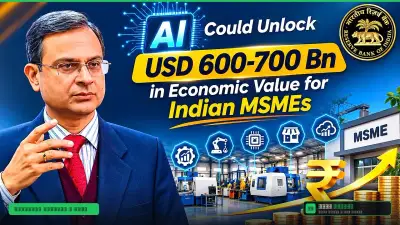
RBI Governor pegs AI’s potential economic value to MSMEs at $685 billion, urges faster adoption
Key facts, background context, and practical takeaways as RBI Governor pegs AI’s potential economic value to MSMEs at $685 billion, urges faster adoption, tracked by Need Bharat's Economy, Banking & Jobs desk.